

Review · SCOTLAND
Official Guided Distillery Tour and Whisky Tasting near Edinburgh
Rosebank Distillery’s appeal is the way it joins an old site with a very modern visitor experience. You begin with projected storytelling on the original warehouse walls, then move through a new glass-fronted still house with three huge copper pot stills before settling in for whisky.
I like the clear shape of the 90-minute visit. You get both the working side of whisky production and a proper tasting, rather than a quick look around followed by one token sip. I also like that the guides, including Eva, Victor, and Brooke, are praised for making the subject friendly for first-time whisky drinkers.
The main consideration is that the tour takes place in Falkirk, not central Edinburgh, so you need to allow time for the journey. At $34.53 per person, it is fair value if you want the full distillery story and guided tasting, but less appealing if you only want to see the building or buy a dram.
Key points at a glance
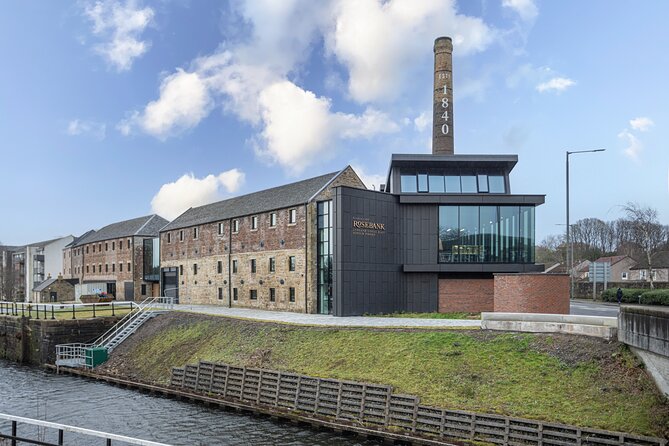
- A distillery reborn: Rosebank was founded in 1840 and has been restored as a working whisky site after years of silence.
- A strong visual opening: Projected storytelling uses the original warehouse walls to explain the place before the walking tour begins.
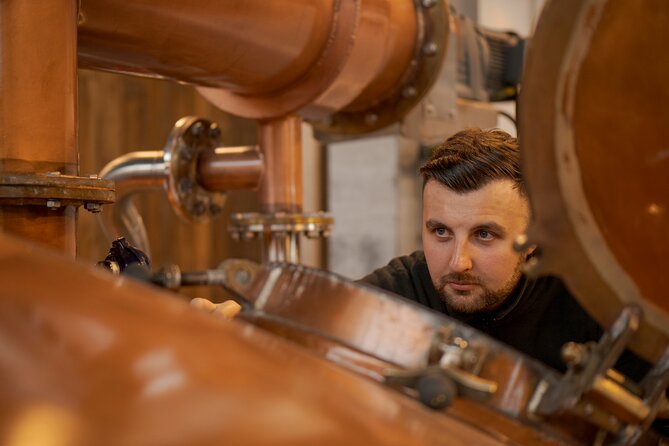
- Three copper pot stills: The glass-fronted still house gives you a close look at the equipment at the heart of production.
- Two single malts plus new make: The tasting includes Glengoyne 12 Year Old, Tamdhu 12 Year Old, and a sample of new make spirit.
- Friendly guidance for beginners: Eva and Victor are especially good names to look for when choosing a tour time, based on the consistently warm feedback about their approach.
- Easy access from two cities: The Falkirk location is close to both Edinburgh and Glasgow and can be reached by train.
Rosebank’s 1840 story begins on the warehouse walls
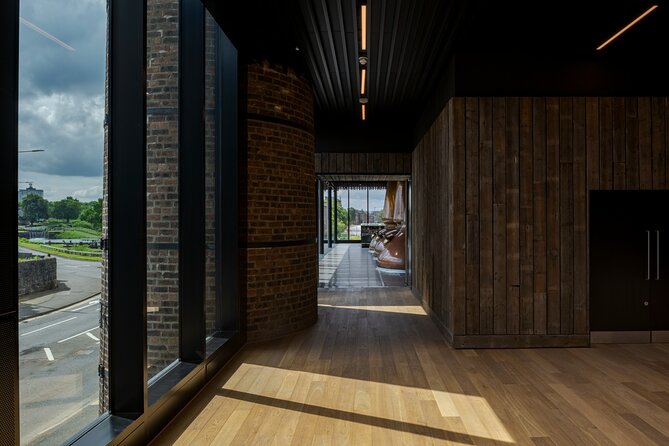
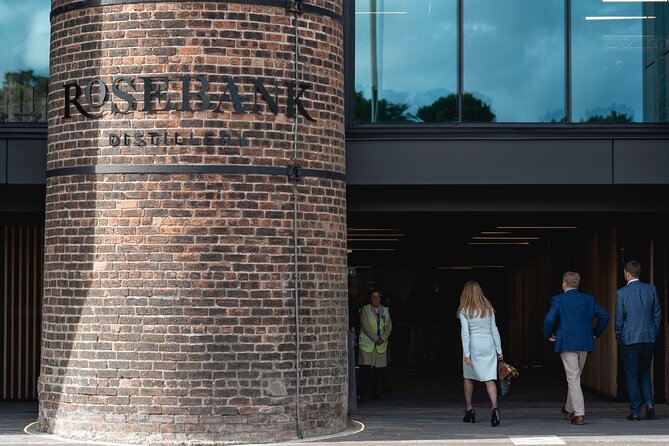
Your visit starts at Rosebank Distillery in Falkirk, on Camelon Road. The first part is not a long lecture in a plain room. Instead, the story of the old distillery is projected around you onto the original warehouse walls.
That choice matters. A silent distillery can feel like a museum object, frozen in time. Rosebank’s opening presentation gives the restored buildings a sense of purpose before you see the new production spaces. You get the setting first, then the machinery and process make more sense.
Rosebank was founded in 1840 and is described as one of Scotland’s highly regarded silent distilleries. In whisky language, silent means it stopped producing. The current experience is built around its return to working life, so the tour carries two stories at once: the older site and the modern operation now occupying it.
I like this opening because it should help you understand why the restoration matters. You are not simply entering a polished new attraction with a historic name attached. The original warehouse walls remain part of the experience, and the story is presented as a reawakening rather than a routine factory visit.
The projection format should also work well for people who do not know whisky. You do not need to arrive with a working knowledge of malt, mash, fermentation, or cask types. The guides can establish the basic setting before the more technical details begin.
More Distillery Tours in Scotland
- Edinburgh: Holyrood Distillery Whisky & Gin Tour
★ 4.6 · 982 reviews - Glasgow: Clydeside Distillery Tour and Whisky Tasting
★ 4.7 · 820 reviews - Port of Leith Distillery Tour and Tasting
★ 5.0 · 579 reviews
The new distillery makes production easy to follow
From the warehouse, the guide takes you through the new distillery and explains the whisky-making process step by step. The information is intended to be entertaining as well as useful, which is important in a tour lasting about an hour and a half.
Whisky production can become a blur of unfamiliar terms. A good guide gives you a simple order to follow: raw ingredients, the stages that turn them into spirit, the stills, and then the casks where the whisky matures. Rosebank’s tour is structured around that process rather than a string of unrelated facts.
The most striking production area is the glass-fronted still house. Inside are three enormous copper pot stills. You can expect these stills to be the visual centre of the walking portion, and the glass walls should make it easier to see the equipment without losing the sense that you are looking into a real working space.
The still house also helps explain why distillery design matters. These are not decorative copper ornaments placed for photographs. They are the main vessels used to distil the spirit, and their shape and operation form part of the character of the whisky.
I would pay attention to how your guide explains the process here, rather than trying to memorize every term. Eva and Victor have both been singled out for making the tour informative without making it stiff. Victor, in particular, is a strong choice for someone tasting whisky for the first time, since he is known for answering questions clearly and keeping the tone relaxed.
The tour group can include up to 42 people. That is a moderate-to-large maximum, so the quality of the guide matters. The glass-fronted design helps with visibility, but anyone who prefers a very small, quiet tour should know that this is not presented as a private visit.
The warehouse connects the machinery to the finished drink
After the still house, you visit the warehouse where the whisky casks are kept. This is the point where the process shifts from making spirit to waiting for maturation.
A cask of new spirit is not the same thing as finished whisky. Time in wood changes its colour, aroma, texture, and flavour. Seeing the casks after looking at the stills gives you a useful connection between the clear spirit produced at the distillery and the whisky served later in the tasting room.
The warehouse is also important because it carries the site’s older identity forward. You have already seen the original walls during the opening story, then the new still house, and now the casks. The visit moves between Rosebank’s past, present production, and future whisky without needing a separate museum stop.
Details about the casks can vary with the guide and the tour presentation, so I would not expect this part to be a long technical seminar. Its value is more basic and practical: you see where the whisky rests and why the distillery’s work continues long after distillation ends.
If you have never visited a distillery, this is a good place to ask questions. A guide such as Eva or Victor can help you connect what you smell and taste later with the production stages you have just seen.
The tasting room gives the tour a proper finish
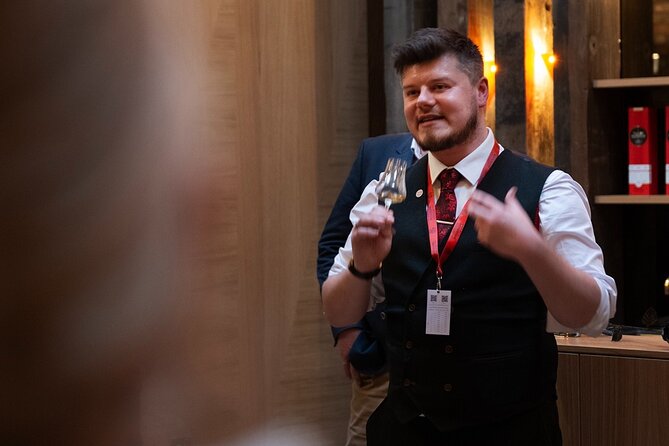
The final stop is a luxurious tasting room, where the guide leads a tutored tasting. You receive two award-winning single malts and a sample of new make spirit.
The two named whiskies are:
- Glengoyne 12 Year Old Highland Single Malt
- Tamdhu 12 Year Old Speyside Single Malt
- New make spirit, sampled before it has matured into whisky
This is a well-chosen set for learning. The Glengoyne and Tamdhu offer two established single malts from different Scottish whisky regions, while the new make shows you what spirit is like before years in a cask change it.
That contrast is the most useful part of the tasting. You are not asked to judge whisky only by whether you like it. You can consider how the smells and flavours change between a young, clear spirit and mature whisky.
The tasting is tutored, so the guide should explain how to approach each dram. If you are already comfortable with whisky, you can use the session to compare the two single malts. If you are new to it, you can take the pressure off yourself. There is no need to identify obscure flavours or pretend to enjoy something that does not suit you.
I especially like that the tasting includes new make rather than serving only two polished whiskies. It gives you a better picture of the full production chain. The sample may be the most unfamiliar drink of the session, but it is the one that shows what the still house has produced before the warehouse begins its work.
The tasting room is described as luxurious, which gives the finale a more settled feel than simply drinking while standing beside machinery. Still, the purpose is educational as much as comfortable. This is a tutored tasting, not a free-pouring bar session.
More Whisky Tastings in Scotland
- Edinburgh: Whisky Tasting with History and Storytelling
★ 4.9 · 2,451 reviews - Scotch Whisky Tasting & Stories — Bespoke Whisky Lounge
★ 5.0 · 972 reviews - From Edinburgh: Scottish Highlands Tour with Whisky Tasting
★ 4.8 · 628 reviews - Edinburgh: The Lost Close Underground Scotch Whisky Tasting
★ 4.7 · 474 reviews
Eva, Victor, and Brooke shape the experience
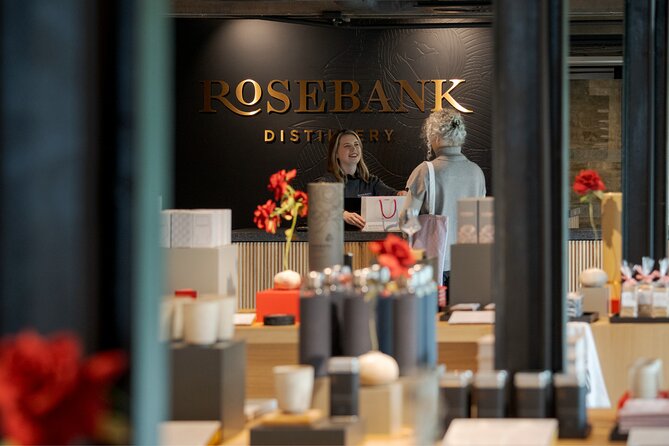
The guides have a noticeable effect on this tour. Eva is praised for being informative, fun, and able to answer questions. Victor is repeatedly described as friendly, passionate, and especially effective with people who have never tasted whisky before. Brooke is also thanked for helping create a memorable visit.
Those names are useful if they appear when you book or arrive, but guide schedules can change. The larger point is that the experience depends on a person who can explain whisky in plain terms. The available feedback is unusually consistent about that human side of the visit.
You should feel free to ask basic questions. This is not an experience reserved for whisky collectors. The tour is designed to engage people who are curious about how whisky is made, and the tasting gives beginners a practical way to start.
At the same time, experienced whisky drinkers should not expect a specialist masterclass. The tour lasts about 90 minutes and has a maximum of 42 people, so it needs to work for a mixed audience. Its strength is approachability, not intense technical depth.
What the $34.53 price really buys you
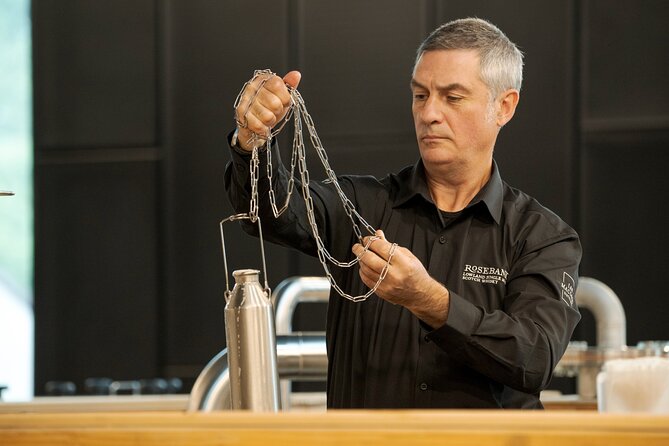
At $34.53 per person, this is priced as a full visitor experience rather than a simple tasting. Your fee covers the guided story of the restored distillery, the production tour, the warehouse, and three samples in the tasting room.
I consider that reasonable value if you are already planning to visit a distillery near Edinburgh or Glasgow. You are getting a structured introduction to Rosebank, access to the production spaces, and a comparison of mature whisky with new make spirit.
The value is weaker if you are mainly looking for a quick drink. Two single malts and new make are useful samples, but the visit is built around the complete tour. You are paying for the guide, the building, the restoration story, and the chance to see a working distillery.
Prebooking also matters. The experience is often booked well ahead, with an average lead time of 46 days. That does not mean every date will sell out, but it does tell me not to leave this until the last minute if Rosebank is important to your Scotland plans.
The tour is offered in English. A mobile ticket is provided, and confirmation arrives at booking. Free cancellation is available up to 24 hours before the start time, while cancellations or changes inside that window are not accepted for a refund.
Getting to Rosebank from Edinburgh or Glasgow
Rosebank Distillery is in Falkirk, close to both Edinburgh and Glasgow. The site is near public transportation and is described as easy to reach by train, which makes it a practical choice if you do not want to drive.
That Falkirk setting is also the main drawback. This is not an Edinburgh Old Town attraction that you can fit between the castle and dinner. You need to plan the journey, arrive at Camelon Road, and keep the 90-minute tour itself in mind when arranging the rest of your day.
Because the activity starts and ends at Rosebank Distillery, there is no separate city-centre pickup or drop-off described. Treat it as a destination visit. Check your train timing before booking, and allow enough room around the fixed tour time rather than trying to squeeze it into a tight itinerary.
Service animals are allowed. The maximum group size is 42, and the tour is conducted in English.
Who should book the Rosebank tour?
I would recommend this experience to you if you want a first proper look at Scottish whisky production without committing to a highly technical course. It suits couples, curious first-time drinkers, and anyone who wants a distillery visit that combines architecture, machinery, history, and tasting.
It is also a good option if you are staying in Edinburgh or Glasgow and want a short outing beyond the city. Falkirk makes the visit more manageable than a remote Highland distillery, especially for a day built around public transportation.
I would hesitate only if you dislike group tours, have no interest in tasting whisky, or want to spend your time in central Edinburgh. The maximum group size of 42 may feel busy, and the 90-minute format leaves limited room for lengthy individual questions.
Should you book this distillery tour?
Book it if you want the full Rosebank story: an 1840 site, projected warehouse storytelling, a modern still house, three copper pot stills, a cask warehouse, and a guided tasting. The strongest reason to choose it is the balance between production and drink, with guides such as Eva and Victor helping make the subject easy to follow.
Skip it if you only want a quick dram or a small private tasting. For most people who want a practical introduction to Scotch whisky near Edinburgh or Glasgow, the price is fair and the itinerary has enough substance to justify the journey to Falkirk.
FAQ
How long does the Rosebank Distillery tour last?
The guided tour and tasting last approximately 1 hour and 30 minutes.
Where does the tour begin and end?
The experience begins at Rosebank Distillery, Camelon Road, Falkirk, FK1 5SQ, UK. It ends back at the same meeting point.
What whiskies are included in the tasting?
The tasting includes Glengoyne 12 Year Old Highland Single Malt, Tamdhu 12 Year Old Speyside Single Malt, and a sample of new make spirit.
Is the tour offered in English?
Yes. The experience is offered in English.
How many people can join the tour?
The maximum group size is 42 people.
Can I reach the distillery by public transportation?
Yes. The distillery is near public transportation and is described as easy to reach by train from the Edinburgh and Glasgow area.
What is the cancellation policy?
You can cancel up to 24 hours before the experience start time for a full refund. Cancellations or changes made less than 24 hours before the start time are not accepted for a refund.
Fresh on the whisky trail around Scotland
- Craigs Deluxe Whisky Tour Shore Trip from Port of Invergordon★ 5.0 · 2 reviews
- Highland Whisky Distilleries Shore Trip from Invergordon Cruise Port★ 5.0 · 2 reviews
- Singleton of Glen Ord Distillery Classic Tour★ 5.0 · 4 reviews
- Stirling Castle Whisky and The Kelpies Tour★ 5.0 · 9 reviews
- Barrel-top whisky tasting in St Andrews★ 5.0 · 20 reviews
- Golf, Whisky and Fish & Chips (A “VERY” Scottish Experience)★ 4.5 · 12 reviews
- Cardhu Distillery Flavour Journey – Full sensory tour & tasting★ 5.0 · 3 reviews
- Oban Wee Walk and A Whisky Tour★ 5.0 · 5 reviews
Whisky Tastings, side by side.

Edinburgh: Whisky Tasting with History and Storytelling
Read our review →
Nashville to Jack Daniel’s Distillery Bus Tour + Whiskey Tastings
Read our review →
Dublin: Irish Whiskey Museum Tour and Whiskey Tasting
Read our review →
Scotch Whisky Tasting & Stories — Bespoke Whisky Lounge
Read our review →
Glasgow: Clydeside Distillery Tour and Whisky Tasting
Read our review →
Cork Midleton DistilleryJameson Experience & Whiskey Tasting
Read our review →
From Edinburgh: Scottish Highlands Tour with Whisky Tasting
Read our review →
Edinburgh: The Lost Close Underground Scotch Whisky Tasting
Read our review →Lists this tour appears on