
Review · FRANCE
Distillerie Les 1309: Between tradition and modernity – close to Cognac
The best part of Distillerie Les 1309 is its full farm-to-glass story. You move from the old Charente still to the aging cellar, vineyard, grape press, and bottling area, so Cognac is not treated as a mysterious bottle behind a polished counter. You see how the estate’s work fits together.
I like two things in particular: Jérôme’s personal approach and the generous final tasting. He is a third-generation winegrower, and the tour includes three Cognacs and three Pineaux des Charentes. The one thing to consider is that this is a small family distillery, not a large visitor center with elaborate displays or a broad menu of activities.
Key points
- Meet Jérôme, a third-generation winegrower who explains his family’s methods and estate in French or English.
- See the traditional Charente still and follow the stages of distillation rather than only hearing a short product pitch.
- Walk through the vineyard to connect the finished spirit with the local soil, grapes, and farming season.
- Visit the aging cellar, known as the paradise, where Cognacs and Pineaux rest before bottling.
- Taste three Cognacs and three Pineaux des Charentes, with a generous serving style and products available to buy on site.
- Pay only $8 for about 90 minutes, with free cancellation up to 24 hours before the visit and a reserve-now, pay-later option.
Why this small Cognac-area distillery is worth your time
Many Cognac visits focus on a famous name, a grand entrance, and a carefully managed route through a large commercial operation. Distillerie Les 1309 offers something different. You are visiting a working family estate where the guide is also part of the production story.
That difference matters. Jérôme does not simply explain how Cognac is made in general terms. He talks about his family business, the estate, and the work that takes place across the year. You can ask questions as you move between the distillery, cellar, vineyard, and wine-making areas.
The visit lasts about 90 minutes, which is long enough to cover the production chain without turning into a half-day commitment. At $8 per person, it is also unusually modest for a guided spirits experience that includes a substantial tasting. If you are already visiting the Cognac area, this is an easy way to add a local producer to your schedule without spending a large part of your day or budget.
The tradeoff is simple: do not expect a big museum or a theatrical presentation. The appeal is the direct contact with a family producer, the working equipment, and the chance to see parts of the process that larger tours may skip.
More Distillery Tours in France:
- Immersive tour DISTILLERIE PERE MAGLOIRE
★ 5.0 · 314 reviews - Lavender Field & Distillery Tour between Nimes & Arles
★ 4.9 · 173 reviews - Guided tour Distillery of Lavender between Nîmes & Arles
★ 5.0 · 84 reviews
Starting at 1 Rue de Neuvicq with a family welcome
The visit begins at 1 Rue de Neuvicq, where Jérôme welcomes you to the family distillery. The opening section sets the tone for the rest of the experience. Before you see a still or taste a spirit, you hear how the estate developed and how winemaking knowledge passed through three generations.
That family link gives the tour a useful sense of scale. Cognac production can sound technical and distant when explained only through appellations, classifications, and brand names. Here, the subject begins with a family that grows grapes, makes wine, distills, ages, bottles, and sells its own products.
Jérôme guides in French and English, which is important if you want more than a quick translation of technical terms. One English-language visit was praised for clear explanations of every stage, from the family business to the tasting. The tour also includes a look at farm equipment and a grape press, details that are easy to miss on a more formal brand tour.
The exact rhythm can vary slightly depending on questions and group interest. If you are curious about the practical work behind the bottle, this is a good place to ask. The atmosphere is described as friendly and informal, so the opening conversation is not just a scripted introduction.
The Charente still and the patient art of distillation
The first major stop is the distillery, where you see the traditional Charente still. This copper still is central to the Cognac-making process, and Jérôme explains how the distillation works and why each stage matters.
The value here is visual. Instead of hearing that wine becomes Cognac through distillation and then moving on, you can connect the explanation to the equipment in front of you. The old still also provides a clear contrast with the newer parts of the estate. The experience moves between tradition and modernity, showing that the two can work side by side.
You should expect a guided explanation rather than a live distillation demonstration. The supplied details describe the still and the process, but they do not promise that the still will be operating during every visit. If seeing active production is essential to you, keep that distinction in mind.
This stop is especially useful for first-time Cognac visitors. You learn that the finished spirit begins as a farm product, not as a neutral base selected for a factory recipe. The visit helps you understand why the vineyards and cellar matter just as much as the copper still.
The cellar called paradise
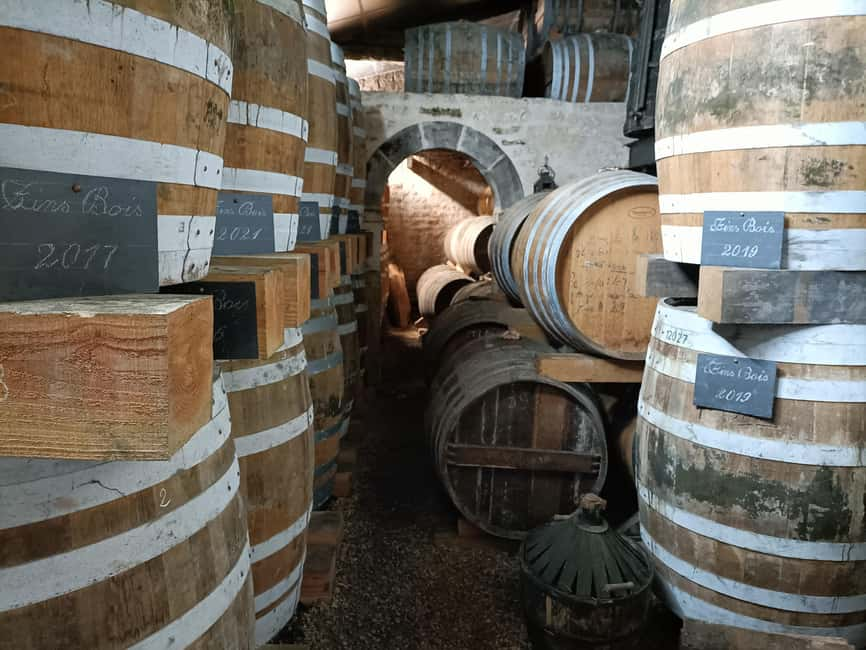
The route then moves into the aging area, referred to as the paradise. This is where the Cognacs and Pineaux rest and develop over time.
The name is more than a cute label. Aging is a slow part of spirits production, and the cellar gives you a physical sense of that wait. The tour explains how the estate’s products are stored before they are ready for sale. You are not only looking at finished bottles. You are seeing the stage in which time becomes part of the product.
This part of the tour may appeal most to visitors who want to understand why Cognac is not simply distilled wine. Distillation creates the spirit, but aging shapes its character. The cellar connects those two ideas without requiring a technical lecture.
The space also helps explain the difference between the distillery’s products. Cognac and Pineau des Charentes are made through different processes, yet both belong to the local wine-growing tradition. Jérôme’s explanations give you a better basis for comparing them later at the tasting table.
More whisky and distillery tours around France:
- Pont-l’Évêque: DISTILLERIE PERE MAGLOIRE Entry with Tastings
★ 4.5 · 72 reviews - Visit Citadelle Gin Distillery
★ 5.0 · 40 reviews - Citadelle Gin Distillery Tour in English
★ 5.0 · 21 reviews - Paris Craft Distillery Make Your Own Gin Workshop
★ 5.0 · 18 reviews
Walking into the vineyard and the Charentes terroir
After the cellar, you head into the vineyard. This section gives the tour a welcome change of pace and connects the production process to the ground where it begins.
You learn about the estate’s terroir and the role of the vineyard in the final spirit. The visit does not treat the grape as an invisible ingredient. You see the place where it grows, then relate that setting to the wine, distillation, and aging stages you have already seen.
This is a short guided section, listed at about 15 minutes, with time for photographs. It is not a long countryside walk, so you should not book it expecting a full vineyard hike. Its purpose is to complete the story of production.
I like this stop because it keeps the experience grounded. Cognac can be marketed through elegant tasting rooms and glossy packaging, but the vineyard reminds you that everything starts with farming. The tour’s focus on the estate’s own work makes that connection clear.
The wine cellar, press, bottling, and labels
The final production area takes you into the wine cellar, where you see how grapes are harvested, processed, bottled, and labeled. You may also see the grape press and farm equipment, adding practical details to the explanation.
This is one of the most useful parts for anyone who likes to understand how a small producer operates. Large distilleries often separate the visitor from the less glamorous steps of production. Here, the tour includes the work between the field and the shelf.
The stop is not only about machinery. Bottling and labeling show how the family estate prepares its products for sale, while the press points back to the harvest. Taken together, these details give you a more complete picture of the business.
There are also good photo opportunities along this section of the route. The itinerary includes a guided tour and photo stop at the winery, followed by another winery stop before the tasting. Keep your camera handy, but remember that the visit is mainly about explanation and conversation rather than staged photographs.
The tour finishes at 11 Rue du Renclos. Since the starting and finishing addresses are different, check the route before you arrive and allow time to understand how the visit is arranged. The supplied information does not specify transport between the two locations, so ask the operator if you need precise directions for moving from the start to the finish.
The tasting: three Cognacs and three Pineaux
The tasting is the payoff, but it works better because you have already seen the production stages. You taste artisanal Cognacs and Pineaux des Charentes made on site, with the products connected to the vineyard, still, cellar, and bottling area.
The tasting includes three Cognacs and three Pineaux des Charentes. That is a generous line-up for an $8 visit, particularly if you are comparing this experience with larger brand tours. The portions have also been described as generous, though the exact serving size can vary.
You can use the tasting to notice the difference between the two categories. Cognac is the distilled grape spirit associated with the Charentes region. Pineau des Charentes is a local fortified wine. You do not need to arrive as a spirits expert. Jérôme guides the tasting and answers questions, so you can ask about production, aging, flavor, or serving ideas.
The atmosphere is intentionally friendly rather than formal. That suits the small-estate setting. You are not pushed through a retail room after a quick sample. Instead, the tasting completes the conversation that began with the family story.
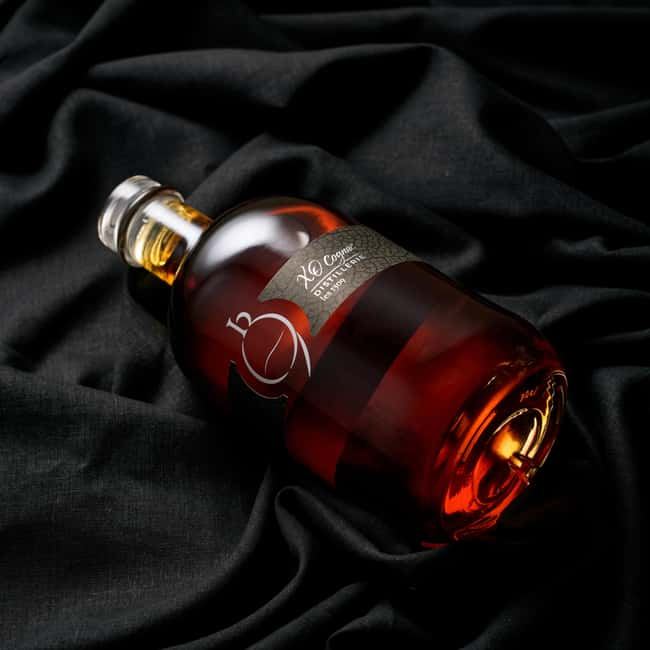
You also have the chance to buy bottles directly at the distillery. Several products have attractive bottle designs, and the direct purchase gives you a practical souvenir tied to the place you visited. Prices are described as reasonable, but no specific bottle prices are provided, so check current costs on the day.
What the $8 price really gets you
At $8 per person, this experience offers strong value. You receive a personalized welcome, a guided tour of the estate, explanations of the still and distillation, a vineyard walk, a look at the wine cellar and equipment, and six tastings.
The value is even clearer if you compare it with the type of visit you want. If you are looking for a polished brand museum with large exhibits and a highly produced presentation, another Cognac tour may suit you better. If you want access to a family producer and a close look at the working process, Les 1309 gives you more personal contact for very little money.
The tour also avoids the need to commit a full day. Ninety minutes leaves room for another winery, a meal, or time in Cognac itself. Since the location is in Nouvelle-Aquitaine, close to Cognac, it fits naturally into a regional itinerary.
Free cancellation is available up to 24 hours before the visit, and you can reserve now and pay later. Those terms are useful if your route through the Charentes is still changing. The experience is wheelchair accessible, and tours are offered in French and English. Some content may remain in its original language, so English speakers should feel comfortable asking Jérôme to clarify technical points.
Who will enjoy this visit most
I would choose this tour for you if you prefer a small producer to a famous commercial brand. It is also a good match if you want to understand the entire chain, from vineyard to bottle, rather than focus only on tasting.
It suits:
- First-time Cognac visitors who want the basic process explained clearly.
- Spirits enthusiasts who want to compare Cognac and Pineau des Charentes.
- People interested in family farming and traditional equipment.
- English-speaking visitors who want a guided visit with an English option.
- Couples, small groups, and independent visitors looking for a short activity near Cognac.
- Anyone who wants to buy directly from the producer after learning how the bottles are made.
It may be less suitable if you dislike alcohol tastings, want a large museum, or expect a long vineyard walk. The tour is also not described as a meal experience, so plan food separately.
Practical details before you book
Set aside 90 minutes for the visit and allow extra time around the start and finish addresses. The starting point is 1 Rue de Neuvicq, and the tour finishes at 11 Rue du Renclos.
Wear comfortable shoes because the route includes the distillery, cellar, vineyard, and winery areas. The supplied information does not give a dress code or detailed terrain information, so ask ahead if you have specific mobility concerns beyond the stated wheelchair accessibility.
English and French are available. If you care about technical detail, English-language guiding has been clear and engaging, but some material may still appear in its original language.
Parking is described as easy by one visitor, though parking arrangements are not formally detailed. You can also purchase the estate’s artisanal products directly after the tasting.
Should you book Distillerie Les 1309?
Book it if you want a personal, low-cost introduction to Cognac production with a real family producer. Jérôme’s role as a third-generation winegrower gives the visit a human center, while the still, vineyard, cellar, press, and tasting make it more complete than a quick sample at a shop.
Skip it if you are seeking a large-scale brand attraction or a long countryside walk. For everyone else, especially visitors already touring the Cognac area, the combination of access, explanation, and six tastings makes this an easy recommendation at $8.
FAQ
How long does the Distillerie Les 1309 visit last?
The experience lasts 90 minutes. It includes the distillery, cellar, vineyard, wine cellar, and guided tasting.
Where does the tour begin and end?
The visit begins at 1 Rue de Neuvicq and finishes at 11 Rue du Renclos.
Who guides the experience?
Jérôme leads the tour. He is a third-generation winegrower who explains the family estate and the production of Cognac and Pineau des Charentes.
Is the tour available in English?
Yes. The tour is offered in French and English. Some content may be presented in its original language.
What will I taste?
The tasting includes artisanal Cognacs and Pineaux des Charentes produced on site. The experience includes three Cognacs and three Pineaux.
Can I cancel or pay later?
You can cancel up to 24 hours in advance for a full refund. You can also reserve your place and pay later.
Fresh on the whisky trail around France
- Tour Guide of an Essential Oil Distillery in the Drôme★ 5.0 · 3 reviews
- Workshop in Rozelieures Assemble your Whiskey★ 5.0 · 2 reviews
- Citadelle Gin Distillery Tour in English★ 5.0 · 21 reviews
- Private tour from Cognac – Cognac Distillery & Bordeaux Winery with a workshop★ 5.0 · 2 reviews
- Paris Craft Distillery Make Your Own Gin Workshop★ 5.0 · 18 reviews
- Paris Visit and gin tasting in English★ 3.8 · 5 reviews
- Guided Tour and Tasting at the Distillerie Baccae Paris★ 5.0 · 6 reviews
- Paris Gin Craft Distillery Tour and Tasting★ 5.0 · 2 reviews
Distillery Tours, side by side.

Dublin: Jameson Whiskey Distillery Tour with Tastings
Read our review →
Dublin Jameson Distillery Bow St. Tour and Tasting 45 mins
Read our review →
Dublin Jameson Distillery and Guinness Storehouse Guided Tour
Read our review →
Nashville to Jack Daniel’s Distillery Bus Tour + Whiskey Tastings
Read our review →
Dublin Teeling Whiskey Distillery Guided Tour and Tasting 1 Hour
Read our review →
Edinburgh: Holyrood Distillery Whisky & Gin Tour
Read our review →Lists this tour appears on