
Review · TANZANIA
7 days Kilimanjaro climb via Machame route (Whiskey route)
The Machame Route earns its Whiskey Route nickname honestly: it is scenic, demanding, and not the gentle way up Kilimanjaro. In seven days, you pass from wet rainforest to cold moorland, volcanic rock, alpine desert, and the snow near Uhuru Peak. I like the strong scenery and the smart climb-high, sleep-lower pattern at Lava Tower and Barranco Camp. I also like that meals, purified water, park fees, tents, and rescue fees are included.
The catch is the itinerary’s short length. Altitude is the real opponent, not simply the distance. The trail is steep in places, the forest can turn into mud, and summit night is a long, cold effort after sleeping at 4,550 meters. This suits a fit, determined hiker more than a first-time camper looking for an easy mountain holiday.
Key points to know before booking
- Lava Tower at 4,630 meters gives you a useful acclimatization day before dropping to Barranco Camp.
- The Barranco Wall looks worse than it feels, but it still requires a steady head and sure footing.
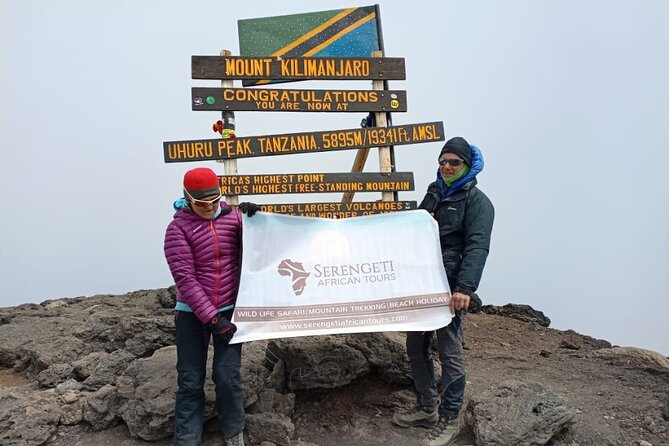
- Summit night begins around 11:30 p.m., with Stella Point at 5,685 meters and Uhuru Peak at 5,895 meters.
- The group limit is 16 people, with professional guides, cooks, and porters supporting the climb.
- The $2,300 price includes the core mountain costs, including park and rescue fees, meals, water, tents, and staff.
- Personal climbing gear and tips are extra, so your final budget will be higher than the advertised price.
Why the 7-day Machame Route is worth considering
Machame is the most popular route on Kilimanjaro because it offers a changing parade of scenery. You begin under dripping forest canopy and finish among volcanic rock, snow, and wide views above the clouds. The route also has more visual variety than a straightforward up-and-down trail.
I especially like the way Day 3 is arranged. You climb to Lava Tower at 4,630 meters, where headaches and breathlessness may begin, then descend nearly 680 meters to Barranco Camp. That is useful mountain planning: your body gets time at a higher altitude, but you sleep lower.
The seven-day plan also gives you more time than a very short Kilimanjaro itinerary. Still, seven days is not generous for everyone. You need to walk slowly, drink the supplied water, listen to your guides, and accept that summit success is never guaranteed.
Serengeti African Tours has received a strong overall response, with a listed five-star rating from 16 reviews and 100 percent recommendation. The praise centers on the mountain crew, food, organization, and personal support. Guides named in the feedback include Gasto, James, and David. Lucas is repeatedly praised for answering questions and organizing the trip.
That is useful, but do not treat a friendly crew as a substitute for preparation. The mountain remains high, cold, and physically demanding. A good guide can help you manage the climb, but you still need suitable clothing, boots, rain protection, and enough fitness to walk for several hours each day.
More Week-Long Trips in the world:
- KILIMANJARO MACHAME ROUTE, (Climb 7days) “Whiskey” route
★ 5.0 · 3 reviews
Day 1: From Arusha to Machame Camp through wet forest
The climb begins with pickup in Arusha, at about 1,400 meters. You drive to Machame Village, where you can buy mineral water and collect a packed lunch. Depending on road conditions, the vehicle may continue toward Machame Gate, or you may walk roughly 3 kilometers from the village if the road is muddy.
That road detail matters. Rain can turn the approach into a slow, slippery walk before the official climb even begins. Wear shoes you can get dirty, and keep your rain jacket easy to reach rather than buried at the bottom of your bag.
At the gate, you register and enter the rainforest almost at once. The first hiking day takes about seven hours, and the trail is likely to be wet, muddy, and slippery, especially during rainy conditions. You stop for lunch partway up before continuing to Machame Camp.
The forest is a strong opening to the route. It feels shaded and enclosed, with a clear sense that you are leaving ordinary roads behind. The drawback is that the first day can be more uncomfortable than expected. Wet socks, slick roots, and a long uphill walk are not small matters when you are still adjusting to the pace.
Day 2: Moorland views and a cold night at Shira Camp
Day 2 takes about six hours and covers roughly 9 kilometers through the moorland zone. You leave Machame Camp after breakfast, climb for about an hour to the top of the forest, then continue at a gentler grade for another two hours.
The trail opens onto the Shira Plateau. You can look toward the Western Breach and its glaciers, with Kibo now visible to the east. This is one of the route’s first big rewards: the forest gives way to open high country, and the mountain begins to feel much larger.
Shira Camp sits at about 3,840 meters. The air is colder and the camp is exposed, with temperatures possibly falling well below freezing. Porters boil water for drinking and washing, while dinner is served at camp.
This is where the included mess tent earns its keep. A table, chairs, hot food, and a sheltered place to sit can make a major difference after a cold hike. The company promises large portions of fresh, nutritious food, and the feedback gives the mountain cooks particular credit. Even so, do not expect hotel comfort. You are camping at altitude, and washing water is limited to what the crew can heat and provide.
Day 3: Lava Tower and the first serious altitude test
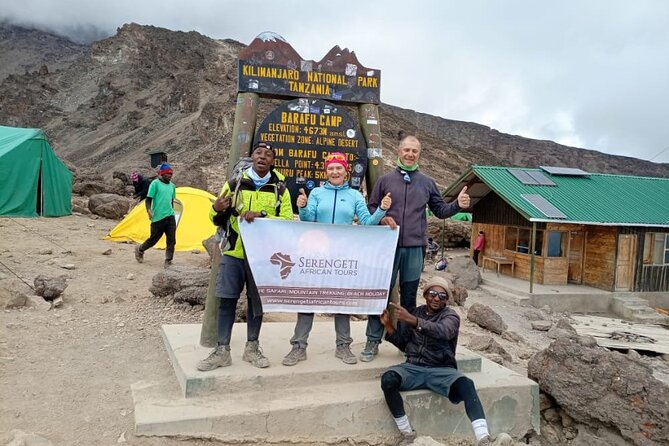
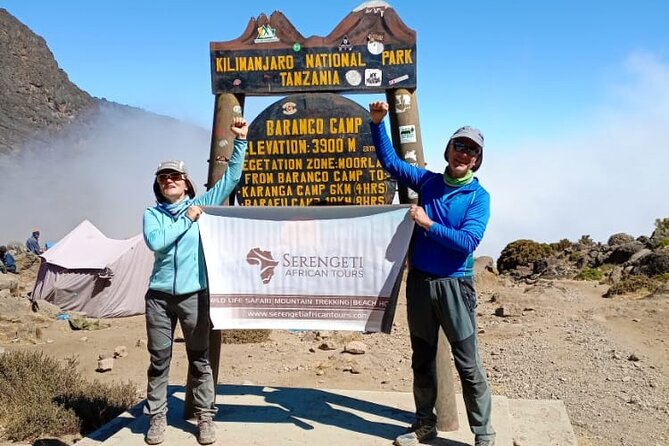
Day 3 is the route’s key acclimatization day. You walk for about five hours through a semi-desert area of volcanic rock, reaching Lava Tower at 4,630 meters. Lunch is served near the tower before you descend to Barranco Camp.
This is often the toughest day so far because the altitude starts to speak plainly. Breathlessness, headaches, and irritability can appear around Lava Tower. Take those signs seriously and tell your guide. Do not try to hide symptoms to prove toughness.
The descent to Barranco Camp is the clever part of the day. After spending time high at Lava Tower, you sleep around 680 meters lower. That gives your body a better chance to adjust than simply climbing higher and camping there.
The total hiking time is listed at about six hours. The path is rocky and the air is thin, so a slow pace is sensible. Keep your water close, eat lunch even if your appetite has faded, and let the guides set the rhythm. The crew’s job is not just to point out the trail. It is also to watch how you are coping.
More whisky and distillery tours around the world:
- Edinburgh: The Scotch Whisky Experience Tour and Tasting
★ 4.7 · 5,213 reviews - Dublin: Jameson Whiskey Distillery Tour with Tastings
★ 4.7 · 4,859 reviews - Dublin Jameson Distillery Bow St. Tour and Tasting 45 mins
★ 5.0 · 4,690 reviews - Melbourne: Yarra Valley Wine, Gin, Whisky and Chocolate Tour
★ 5.0 · 3,667 reviews
Day 4: The Barranco Wall and the Karanga Valley
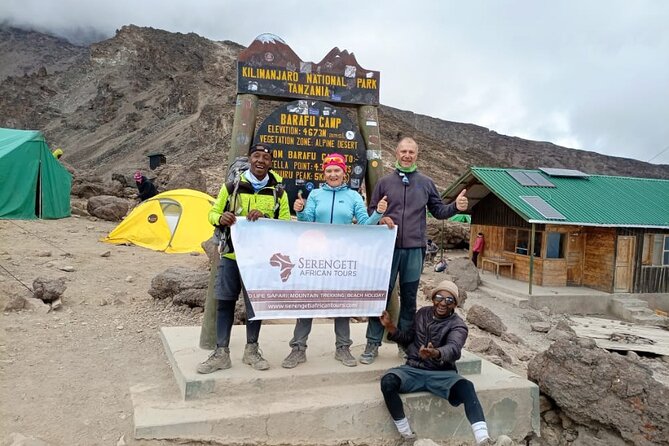
Day 4 is shorter, at about four to five hours and roughly 5 kilometers, but it begins with one of the most memorable sections of the Machame Route: the Barranco Wall.
From below, the wall can look intimidating. In practice, it is described as a Class 2 hike and is generally less frightening than its appearance suggests. You still need to use your hands in places and pay attention to your footing, but this is not a technical rock-climbing section.
At the top, you can look toward Heim Glacier and see clouds below. The trail then rises and falls through the Karanga Valley. That repeated up-and-down movement can be tiring, especially after the wall, but the shorter day gives you time to recover.
I see Day 4 as an important balance point. It is not a rest day, yet it gives you a manageable amount of walking before the final high camps. If you are uneasy with steep drops or exposed rock, tell the guide early. A calm, measured pace is much better than rushing to keep up with stronger walkers.
Day 5: Barafu Camp and preparation for summit night
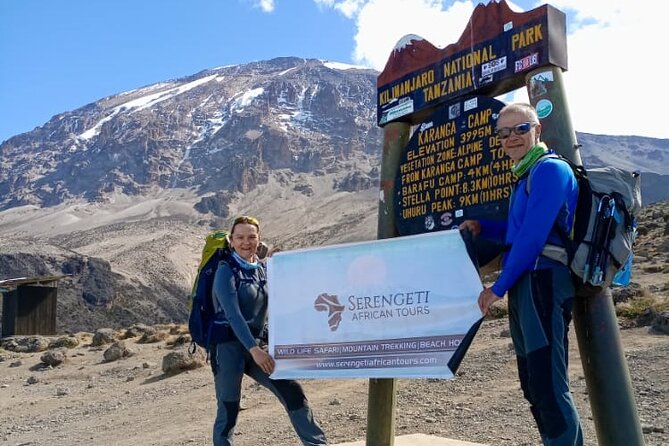
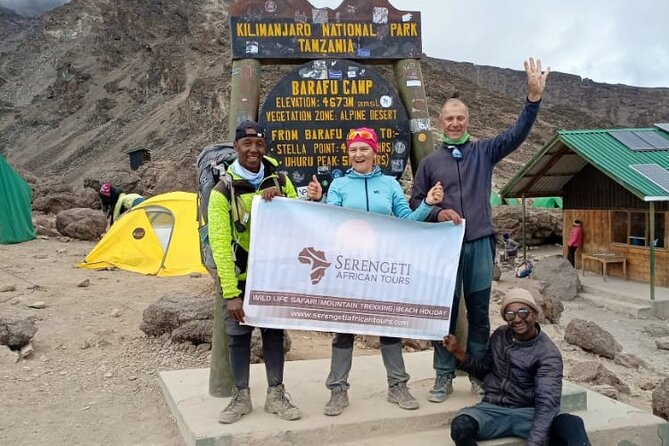
The walk from Karanga Camp, at about 3,959 meters, to Barafu Camp takes roughly two to three hours and covers about 4 kilometers. The trail joins the Mweka Route, which you use during the descent.
You pass the last water stop for the porters before reaching Barafu Camp at about 4,550 meters. There is no accessible water at camp, so the crew must carry or prepare what you need. The word Barafu means ice, and the camp sits on an exposed, rocky ridge.
This is not the prettiest campsite, but it is functional and important. Tents can be exposed to wind and rocks, so look over your sleeping area before dark. Familiarize yourself with where you will walk, where your gear is, and what you need for the night push.
Dinner is served early, then you rest before the summit attempt. This can be the oddest night of the trip. You may be trying to sleep while thinking about the climb ahead, and you will be woken around 11:30 p.m. for tea and biscuits.
Pack your summit clothes before lying down. Put gloves, hat, headlamp, water, snacks, and extra layers where you can reach them. At Barafu, small bits of organization matter.
Day 6: Stella Point, Uhuru Peak, and the long descent
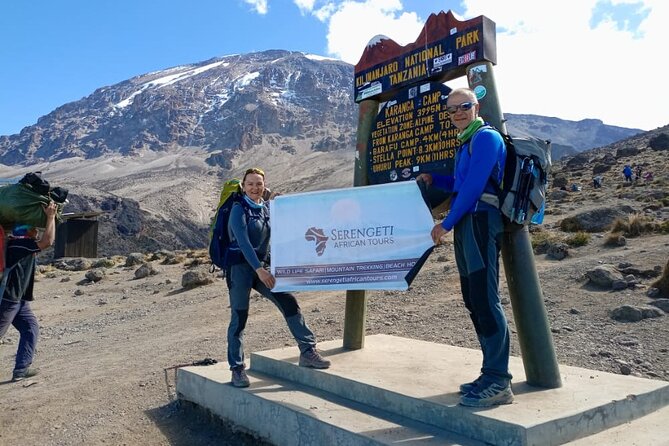
Summit day begins in darkness. You head northwest over heavy scree toward Stella Point, at 5,685 meters. The walk to the crater rim is listed at about six hours and is often the most mentally and physically demanding part of the route.
The slow pace is essential. At this height, every step costs more energy. You may feel cold, breathless, or discouraged. Keep moving steadily, follow the guide, and focus on the next short section rather than the entire mountain.
At Stella Point, you may catch sunrise if the weather cooperates. The view can be extraordinary, but do not linger too long in the cold. From Stella Point, the trail normally reaches snow before the final two-hour ascent to Uhuru Peak, the summit at 5,895 meters.
The time at the top depends on weather conditions. This is not a place for a long celebration. Take your photographs, enjoy the achievement, and follow the guide’s advice about turning around.
The day does not end at the summit. You descend to Barafu Camp, rest briefly, and continue toward Mweka Camp, according to the route schedule. The supplied itinerary summarizes this as a six-hour hiking day, but you should be ready for summit day to feel long and exhausting. The high point is only half the story.
Day 7: Forest descent, certificates, and the return to Arusha
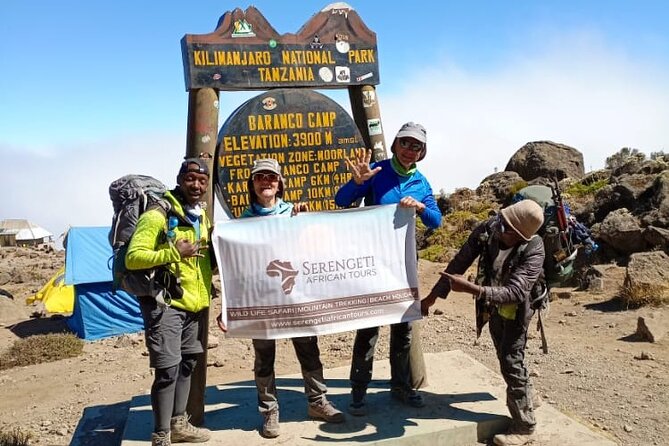
After breakfast, the mountain crew celebrates with singing and dancing. You also present tips to the guide, assistant guides, cooks, and porters at this point. Tipping is not included, so prepare for that separate cost and consider carrying suitable cash.
The descent to Mweka Gate takes about three hours through forest and covers roughly 15 kilometers. At the gate, you sign your name to receive a completion certificate. Those reaching Stella Point receive green certificates, while those reaching Uhuru Peak receive gold certificates.
After the gate, you continue for about an hour and 3 kilometers to Mweka Village. The activity ends back at the meeting point in Arusha. This final day is easier than summit day, but tired knees can make downhill walking surprisingly hard.
What the $2,300 price includes
At $2,300 per person, this is not a budget walk, but the price covers many of the expensive and necessary parts of a Kilimanjaro climb. Included are park fees, rescue fees, mountain guides, meals, purified drinking water, waterproof four-season private sleeping tents, and a mess tent with tables and chairs.
You also receive breakfast, lunch, and dinner throughout the mountain stay. The published inclusions list seven breakfasts and seven lunches, along with six dinners. Since the timing of summit night differs from a normal camping day, confirm the exact meal arrangement before departure.
The biggest value comes from the support system. Carrying your own food, water, shelter, and park administration would be a major task. Here, porters handle much of the camp equipment, cooks prepare meals, and guides manage the route and pacing.
Budget separately for tips, flights, and personal climbing gear. A waterproof jacket, warm layers, gloves, headwear, sturdy footwear, and suitable cold-weather equipment are not supplied in the listed price. Ask the company for a current packing list before you arrive.
The company also states that porters receive fair and ethical treatment. That is worth checking in person through clear tipping practices and respectful conduct. The porters make the camp system possible, and their work deserves proper recognition.
Who should book this climb?
I would choose this route if you want the best mix of Kilimanjaro scenery and a serious physical challenge. It suits people with moderate fitness, hiking or backpacking experience, and enough patience to walk slowly at altitude.
You do not need to be an elite athlete, but you should be comfortable with several hours of uphill walking, cold camping, limited washing water, and an overnight summit start. The steep trail and seven-day schedule are not ideal for someone seeking a relaxed introduction to mountain trekking.
The maximum group size is 16. That is large enough to include a social mix of hikers, but small enough for the guides to manage as one group. Past groups have included people from their mid-20s to early 50s, though age alone says little about how someone will handle altitude.
The strongest praise for this operation focuses on staff support. Gasto is singled out for being caring, funny, trustworthy, and attentive. James is praised for helping a group reach the summit, while David is credited with strong guiding during summit night. Lucas receives repeated praise for prompt communication before the trip.
Those names are useful when comparing operators, but ask who your actual lead guide will be and how many assistant guides and porters will join your group. Clear answers before booking are part of a well-run climb.
Practical booking notes
Pickup is offered from Arusha, and the activity ends back at the meeting point. The listed start time is 12:00 a.m., while the first-day plan says an early breakfast and pickup. Confirm the exact pickup time, hotel arrangement, and first-day transport details before arrival.
Confirmation is provided at booking. The tour is near public transportation, although the mountain approach depends on a vehicle and road conditions. Free cancellation is available if you cancel at least 24 hours before the local start time. Changes or cancellations inside that window are not accepted.
Should you book the 7-day Machame climb?
Book it if you want Kilimanjaro’s most scenic popular route, value a strong support crew, and accept that the mountain will test you. The Lava Tower acclimatization day, Barranco Wall, and high summit camps make this a memorable route with plenty of variety.
Think twice if you want a soft adventure, dislike cold camping, or have no plan for personal gear and tipping costs. For a fit hiker who prepares properly, the $2,300 package offers solid coverage of the major mountain expenses, with the guide and porter support doing much of the hard logistical work.
FAQ
Where does the Kilimanjaro climb start?
The climb starts in Arusha, Tanzania, with pickup offered from the meeting point.
How long is the Machame Route climb?
The experience lasts approximately seven days.
What is the highest point reached?
Uhuru Peak is at 5,895 meters. Stella Point, on the crater rim, is at 5,685 meters.
How large can the group be?
The maximum group size is 16 people.
Are meals included?
Yes. Meals on the mountain are included, including breakfast, lunch, and dinner according to the published itinerary.
Is drinking water provided?
Yes. Clean, purified drinking water is included while you are on the mountain.
What is not included in the price?
Tips, flights, and personal climbing gear are not included.
Fresh on the whisky trail around the world
- The Full Hoot Distillery Tour & Guided Hooting Owl Experience★ 5.0 · 6 reviews
- NON BUS Old Mission Wine And Distillery Sunset Tour – 4 STOP★ 5.0 · 2 reviews
- Victoria Craft Beer and Distillery Tour★ 5.0 · 5 reviews
- Heke Brewery and Distillery Tour in Waiheke Island with samples★ 4.5 · 3 reviews
- Afternoon Distillery Tour in Newport★ 4.5 · 21 reviews
- Distillery District Breakfast Tour★ 5.0 · 21 reviews
- Toronto Distillery District: Whisky Exploration Game and Tour★ 3.5 · 4 reviews
- NON BUS MOVIE STARS Traverse City Brewery And Distillery Tour★ 5.0 · 2 reviews