
Review · FRANCE
Guided tour Distillery of Lavender between Nîmes & Arles
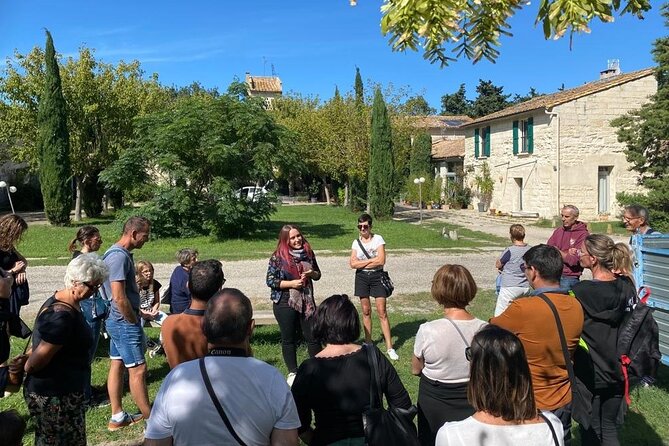
The best part of this small tour is that it takes you past the postcard image of lavender and into the working farm behind it. At un MAS en PROVENCE, near Bellegarde between Nîmes and Arles, you learn how lavender, verbena, immortelle, rosemary, and other plants become essential oils and cosmetics. The farm-to-bottle story makes the visit more useful than a quick photo stop.
I like the friendly teaching style, especially when guides such as Sylvain and Betty involve the group and explain things in clear, simple terms. I also like the excellent value, with an hour of guided time for about $9.65. The main consideration is weather: the visit includes time outdoors, so poor conditions can lead to a change of date or a full refund.
Key points to know before you go
- A working Provençal farm: See how fragrant plants are grown, harvested, and prepared for distillation.
- Guides who make the process easy to follow: Sylvain and Betty are named as especially warm and engaging guides, with multilingual help available at times.
- More than lavender: Learn about verbena, immortelle, rosemary, and other aromatic plants.
- A useful family outing: The visit is designed to hold the attention of children as well as adults.
- A shop with personal advice: Finish by browsing essential oils, cosmetics, and other products with help from the staff.
- A low-cost stop near Nîmes and Arles: The one-hour visit costs about $9.65 per person and returns to the starting point.
A working distillery near Nîmes and Arles
This experience takes place at un MAS en PROVENCE, a family-run organic distillery and cosmetics producer in Occitanie. The address is Le Mas Neuf, Avenue du Félibrige, 30127 Bellegarde, France.
That location matters. You are not visiting a themed display built only for sightseeing. You are visiting a place connected to cultivation, harvesting, distillation, and finished products. The setting gives the tour a practical purpose: you see why the plants are grown and how their scent becomes something you can use at home.
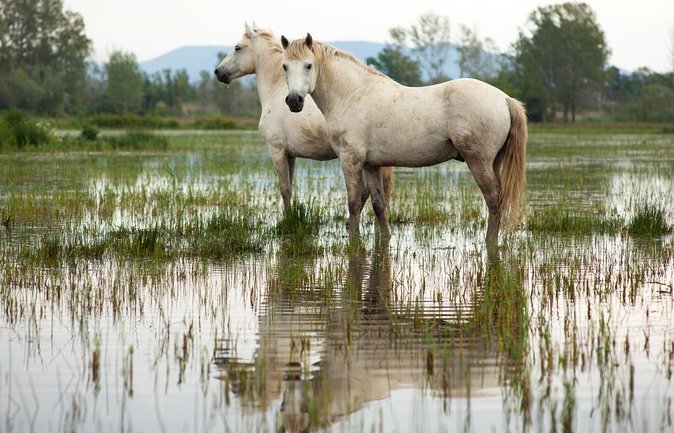
The tour is described as being in the Camargue area, though the meeting point is in Bellegarde, between Nîmes and Arles. If you are planning a day around either city, this can work as a short countryside stop rather than a full-day excursion.
The experience lasts about one hour. That is enough time to learn the basic process without giving up most of your day. You return to the same meeting point at the end, which makes the visit easy to fit around other plans.
More Distillery Tours in France:
- Immersive tour DISTILLERIE PERE MAGLOIRE
★ 5.0 · 314 reviews - Lavender Field & Distillery Tour between Nimes & Arles
★ 4.9 · 173 reviews - Pont-l’Évêque: DISTILLERIE PERE MAGLOIRE Entry with Tastings
★ 4.5 · 72 reviews
Walking through lavender, verbena, and immortelle
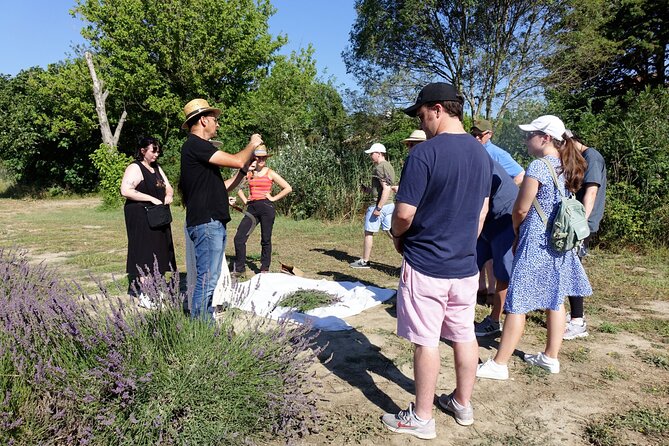
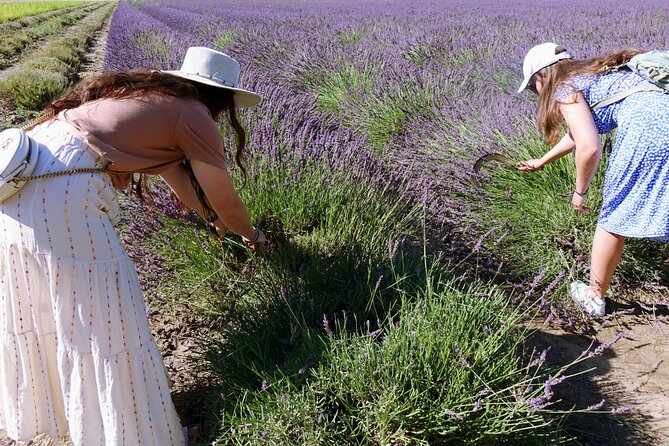
The tour begins with the fragrant plants grown around the Provençal mas. Lavender is the obvious star, but it is not the only plant in the story.
You can expect to learn about verbena, immortelle, rosemary, and other aromatic crops. This variety is one of the tour’s strengths. Lavender often gets all the attention in Provence, yet the visit shows you that different plants have different scents, uses, and growing needs.
The guides explain the plants in a way that works for both adults and children. Rather than assuming you already know the difference between lavender varieties, they introduce the plants and discuss their properties and uses. One particularly useful part of the visit is learning that not all lavender serves the same purpose.
The outdoor portion also gives the tour a sense of place. You are seeing the plants in the setting where they are grown, not only as dried bundles or bottles on a shelf. If the plants are in bloom during your visit, the setting should be especially appealing, but the tour remains worthwhile because it focuses on the full production process.
Bring sensible shoes and be ready to spend part of the hour outside. The weather policy is worth noting, since poor conditions may cause the visit to be rescheduled or canceled with a full refund.
From planter to harvester
A useful detail in the tour is the attention given to agricultural tools. You learn to identify equipment used at different points, from planting through harvesting.
This may sound basic, but it helps you understand the work behind a bottle of essential oil. The fields do not simply produce themselves. Someone must prepare the plants, maintain them, harvest them at the right time, and move them into the next stage of production.
The guide may invite you to take part in the explanations. Sylvain, in particular, is described as a lively guide who involved visitors rather than giving a dry lecture. That approach is helpful if you are visiting with children, since a hands-on question or demonstration keeps the subject moving.
I also like that the visit is not presented as a technical course. You do not need a background in agriculture or cosmetics. The explanations are aimed at ordinary curious people, and the guides make an effort to keep the information clear.
The pace can vary. One visit lasted longer than the planned hour because the guide took time to explain more instead of watching the clock. That is good news if you enjoy questions and conversation, though you should leave some flexibility in your schedule.
Inside the essential-oil distillery
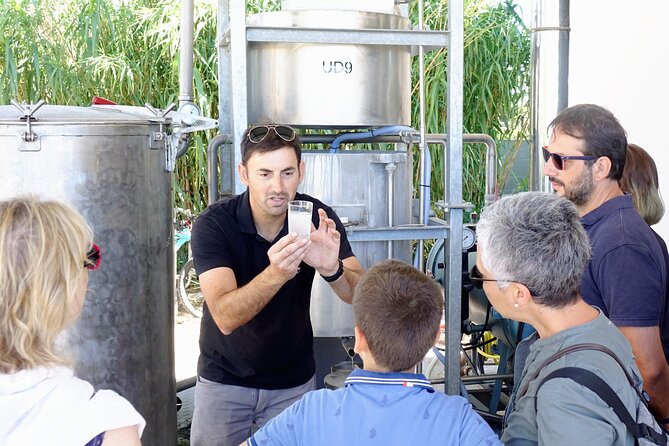
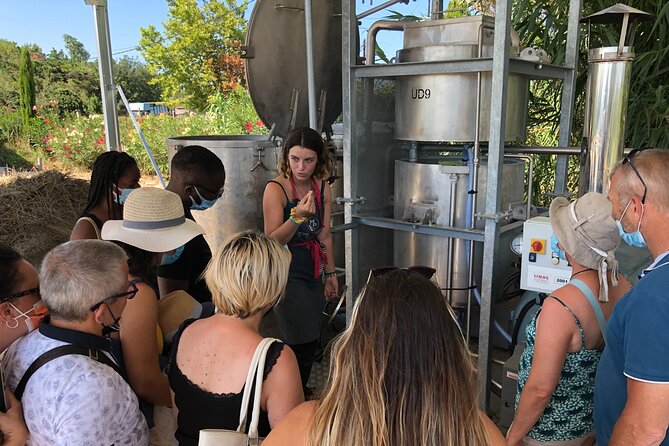
The central indoor section explains how the farm’s plants are turned into essential oils. This is where the visit moves from fieldwork to production.
You get a look at the equipment and learn the basic idea behind extracting fragrant oils from plant material. The presentation is framed as a kind of alchemist’s workshop, but the value is practical: you begin to understand why plant choice, harvest timing, and careful processing affect the final product.
Some visits include a video as part of the indoor and outdoor presentation. The change between the two settings adds variety during a short tour. You are not standing in one room for the entire hour, and the information is easier to absorb when it connects directly to what you have just seen outside.
The distillery portion is also useful for anyone who buys essential oils. A small bottle can seem mysterious when it sits on a shop shelf. Here, you get a clearer sense of the work and equipment behind it. The guide can explain the role of the distillery and the qualities of different plants without turning the experience into a sales pitch.
Still, keep your expectations in proportion. This is a one-hour introduction, not a professional course in distillation or organic farming. You will leave with a better working picture of the process, not every scientific detail.
More Guided Tours in France:
- Guided Tour and Tasting at the Distillerie Baccae Paris
★ 5.0 · 6 reviews - Tour Guide of an Essential Oil Distillery in the Drôme
★ 5.0 · 3 reviews - Dublin Irish Whiskey Museum and Gallery Guided Tour with Tasting
★ 5.0 · 3,078 reviews - Dublin Jameson Distillery and Guinness Storehouse Guided Tour
★ 4.5 · 2,608 reviews
Guides who keep the visit personal
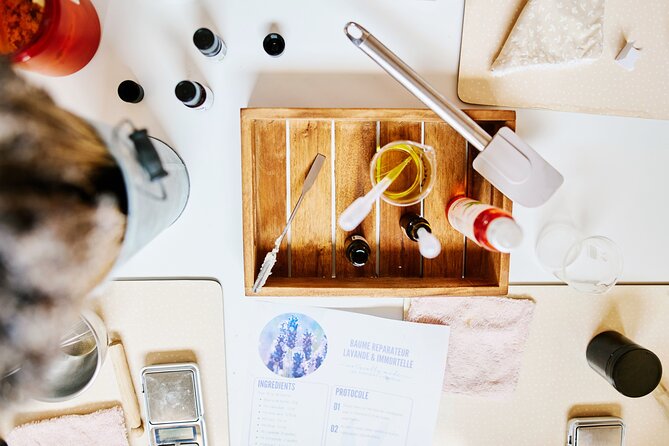
The quality of this experience depends heavily on the guide, and the named guides receive especially strong praise. Sylvain is described as warm, lively, and good at getting people involved. Betty is also praised for telling the farm’s story in a friendly way.
The guides’ teaching style is one of the main reasons this tour works. They explain the farm, tools, plants, and production methods without making the subject feel remote. Several languages may be possible during some visits, and Sylvain has been described as trilingual and able to translate quickly for foreign visitors.
The official offering lists English, so English-speaking visitors have a clear reason to consider this tour. Still, guide availability can vary by date. If language support is especially important to you, check the booking details before you go.
The family-friendly approach is another plus. The visit has been described as suitable for children as young as three and six, and the explanations are intended for parents and children together. The combination of plants, tools, smells, outdoor space, and a working distillery gives younger visitors more to notice than a standard shop visit.
You should also expect a warm, personal tone rather than a rigid scripted tour. That can make the experience feel more genuine. It also means the exact rhythm may depend on the guide and the questions people ask.
The shop extends the experience
The visit ends back at the starting point, with time to explore the shop. This is more than a simple exit through a gift store.
You can look at essential oils, cosmetics, and other products made around the farm’s fragrant plants. Staff can offer personal advice, which is useful if you are unsure how products differ or what type of scent suits you.
I like having this shopping time after the tour rather than before it. Once you understand the crops and production process, the bottles and creams make more sense. You can connect a product to lavender, verbena, immortelle, rosemary, or another plant you have just encountered.
Prices are described as interesting by visitors who bought products, but the tour itself does not require you to purchase anything. That makes the shop a choice rather than an obligation. You can browse, ask questions, and leave empty-handed if nothing appeals.
The store also gives you a way to take home something more connected to the region than a generic souvenir. An essential-oil product or cosmetic from the distillery can serve as a small reminder of the Camargue and Provençal countryside.
Is $9.65 a good value?
At about $9.65 per person, this is one of the easier activities to justify in the Nîmes and Arles area. You receive roughly an hour of guided instruction, outdoor time among aromatic plants, an introduction to farm equipment, and a look at essential-oil production.
The value is strongest if you are already planning to visit the shop or are curious about lavender products. The guided portion gives you context that a self-guided stop would not provide.
It is also a good value for families. A group can spend time together without committing to an expensive full-day outing. Since most people can participate and service animals are allowed, the activity is fairly open to different types of visitors.
The price does not include a broader excursion around the region. You arrange your own way to the mas, and the visit itself lasts only about an hour. If you want a major attraction with several hours of exhibits, this will feel small.
That short length is also its advantage. You can combine it with Nîmes, Arles, or another Camargue stop instead of building your whole day around the distillery.
Who should book this visit?
I would choose this tour if you like local production, gardens, cosmetics, or food and farming traditions. It gives you a closer look at a small organic business and explains how local plants become useful products.
Families should find it especially manageable. Children can see fields, tools, and equipment while adults learn about cultivation and essential oils. The guides’ playful and participatory style helps keep the visit moving.
It also suits visitors who want a quieter break from major Roman monuments in Nîmes or the busy sights of Arles. The tour provides a change of pace without requiring a long commitment.
You may want to skip it if you are looking only for vast lavender fields or a major museum-style attraction. The visit is focused on one farm and its production process. The fields and plants are part of the experience, but the real subject is how the farm works.
Because the activity is private, only your group participates. That can make the visit more comfortable and personal, especially if you have children or want to ask questions. The booking information also says most people can take part, with service animals allowed.
Booking, timing, and cancellation advice
Confirmation is provided when you book, and the experience is offered with a mobile ticket. The tour is usually booked about 17 days ahead, so reserving in advance is sensible if your dates are fixed.
You can cancel for a full refund up to 24 hours before the local start time. Changes or cancellations made inside that 24-hour window are not accepted for a refund.
Weather matters because part of the visit takes place outside. If poor weather forces a cancellation, you are offered another date or a full refund. The same applies if the minimum number of participants is not met, with the choice of another date, another experience, or a refund.
The meeting point is un MAS en PROVENCE Distillerie d’huiles essentielles BIO & Cosmétique en Occitanie, Le Mas Neuf, Avenue du Félibrige, 30127 Bellegarde, France. Since the activity ends there, double-check that exact address before setting out.
Should you book the lavender distillery tour?
Yes, if you want an affordable, friendly introduction to lavender farming and essential oils near Nîmes and Arles. The strongest reasons are the clear explanations, the chance to see several fragrant plants, the family-friendly format, and the chance to speak with guides such as Sylvain or Betty.
I would treat it as a one-hour regional stop, not a full Provence day trip. Book it when you want to understand the work behind local products, enjoy a personal tour, and browse a farm shop with useful advice. At $9.65, the risk is low, and the experience offers more substance than a quick souvenir stop.
FAQ
Where does the lavender distillery tour take place?
The tour starts and ends at un MAS en PROVENCE Distillerie d’huiles essentielles BIO & Cosmétique en Occitanie, Le Mas Neuf, Avenue du Félibrige, 30127 Bellegarde, France.
How long does the experience last?
The planned duration is approximately one hour. The visit may run longer if the guide takes extra time to explain the farm and answer questions.
What plants will I learn about?
The tour covers lavender, verbena, immortelle, rosemary, and other fragrant plants grown at the Provençal mas.
Is the tour offered in English?
Yes. English is listed among the available tour languages.
Is this a private tour?
Yes. Only your group participates in the private activity.
Is the tour suitable for children?
Most people can participate, and the visit is described as suitable for families with young children, including children aged three and six.
What happens if the weather is poor?
If the experience is canceled because of poor weather, you can choose another date or receive a full refund.
Fresh on the whisky trail around France
- Tour Guide of an Essential Oil Distillery in the Drôme★ 5.0 · 3 reviews
- Workshop in Rozelieures Assemble your Whiskey★ 5.0 · 2 reviews
- Citadelle Gin Distillery Tour in English★ 5.0 · 21 reviews
- Private tour from Cognac – Cognac Distillery & Bordeaux Winery with a workshop★ 5.0 · 2 reviews
- Distillerie Les 1309: Between tradition and modernity – close to Cognac★ 4.8 · 6 reviews
- Paris Visit and gin tasting in English★ 3.8 · 5 reviews
- Guided Tour and Tasting at the Distillerie Baccae Paris★ 5.0 · 6 reviews
- Paris Gin Craft Distillery Tour and Tasting★ 5.0 · 2 reviews
Distillery Tours, side by side.

Dublin: Jameson Whiskey Distillery Tour with Tastings
Read our review →
Dublin Jameson Distillery Bow St. Tour and Tasting 45 mins
Read our review →
Dublin Jameson Distillery and Guinness Storehouse Guided Tour
Read our review →
Nashville to Jack Daniel’s Distillery Bus Tour + Whiskey Tastings
Read our review →
Dublin Teeling Whiskey Distillery Guided Tour and Tasting 1 Hour
Read our review →
Edinburgh: Holyrood Distillery Whisky & Gin Tour
Read our review →Lists this tour appears on